OpenClaw agent and path revelation
A clawful of competition lessons, "part 1"


Clawful of Competition
One of ambitious goal I set out for with the Spring into AI competition was to have the entire competition to be administrated by an agentic AI assistant. If you’re into the AI space at all, then you also have read a hundred articles on what agentic AI is and very few “here’s a real problem I solved with agentic AI”. At least, that’s true for me.
See, I’ve read a lot of articles on agentic AI, and a lot of posts on “I had an AI assistant do this amazing thing. Now, signup to my masterclass.”
The question that burned into my mind is a simple one: is this assistant AI technology… real? It feels real. There’s endless debates in my circles if the technology is either real or useful.
See, I use agentic coding tools to author all sorts of software. However, once you drift away from the coding tools… agentic AI suddenly feels mysterious and unknown. At least, it did. Now I’m a hopeless agentic AI addict.
OpenClaw’s fault
This article isn’t about OpenClaw. I’m assuming you know OpenClaw and have used it. This article won’t make sense to anyone who hasn’t used OpenClaw. I mean, it will, but it won’t. It’s precisely the point.
I’ll try, however, to explain the best I can. So let’s start by way of of threading back to a well known concept: path dependency. A simple example: if you toss a match onto a pool of gasoline, a dazzling fire erupts in a blue-orange-yellow glaze.

Path Dependency
One curious phenomenon, and one that continues until this very day is what I’m roughly calling “path revelation”. There’s the idea of path dependency, which it’s instructive to briefly cover this.
Path dependency is a concept in the social sciences that refers to the way past events or decisions influence and constrain future events or decisions. This concept is often used to explain how certain outcomes become entrenched over time, even if they are not the most efficient or optimal choices.
Key Principles
History Matters: Path dependency emphasizes that historical events and decisions play a crucial role in shaping future outcomes. This idea challenges explanations that overlook historical factors.
Mechanisms of Influence: Path dependency operates through mechanisms such as increasing returns, positive feedback effects, and lock-in effects. These mechanisms can cause small initial advantages to become amplified over time, leading to the dominance of a particular outcome.
Examples
I thought some examples would be prudent-perhaps some you’re familiar with, or at the very least you’re familiar with it but don’t realize why.
QWERTY Keyboard

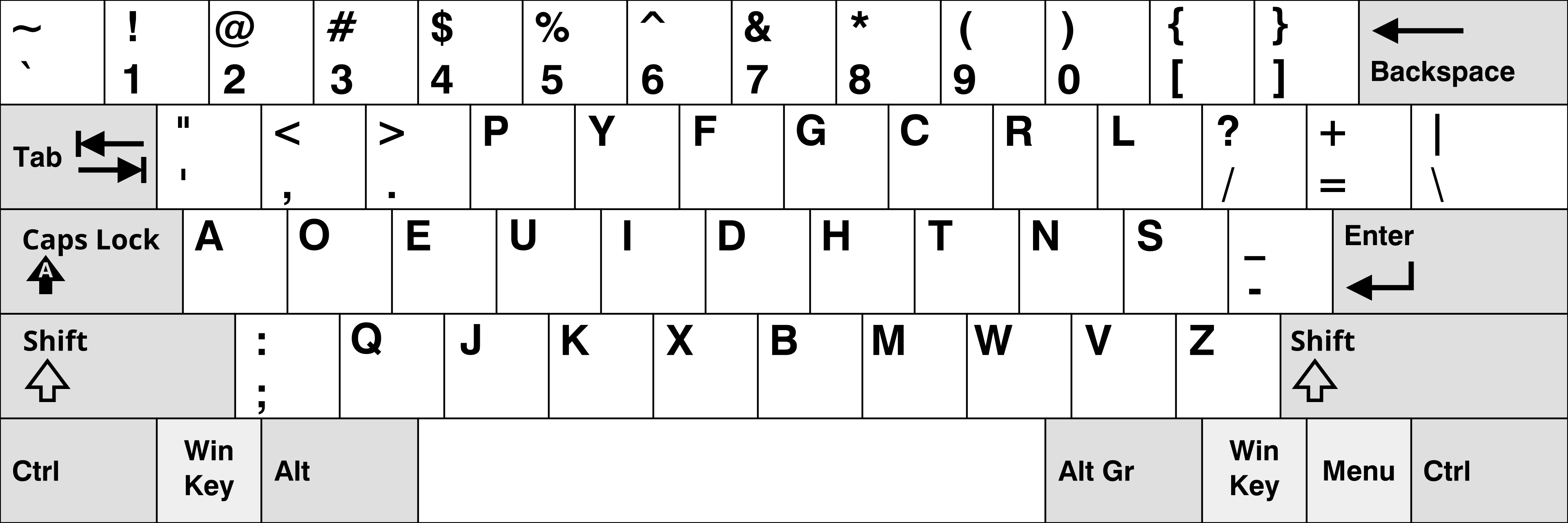
The QWERTY keyboard layout is a classic example of path dependency. Despite the existence of potentially more efficient keyboard layouts, QWERTY has persisted due to historical adoption and the network effects of widespread use. In the late 90s as the internet was taking off, there were a lot of non-QWERTY attempts (DVORAK, being an example of one).
Videocassette Recording Systems
The competition between VHS and Betamax is another example. VHS achieved dominance over Betamax not necessarily because it was superior, but due to factors like network effects and strategic decisions by manufacturers. It’s a keen reminder and study of the effects of technology: you can have superior technology, but if you fail to solve for distribution it doesn’t matter. The market will cast your bones out to sea. Oh, honorable mention if you’ve ever held a laserdisc.
The Implications
Path dependency reminds us that the first workable path often matters more than the theoretically best one. Once a direction is taken, a quiet gravity begins to form around it. Tools are built to support it, people learn its quirks, and organizations begin structuring themselves around its assumptions. Over time that initial choice stops looking like a decision and starts looking like the natural order of things. Changing course then becomes less about picking a better alternative and more about dismantling the invisible scaffolding that grew around the original path.
But working with agentic systems introduced a related phenomenon that feels subtly different. Instead of past decisions locking you into a path, the path itself seems to reveal the next step only after the previous one is taken. Each small capability-deploying a page, updating content, tracking participants-suddenly exposes the next adjacent possibility that wasn’t obvious before. The system becomes less like a fixed roadmap and more like a corridor that lights itself one room at a time as you walk through it. I started thinking of this as Path Revelation, and it’s a strange enough experience that it deserves its own explanation later on.
It’s also important to see moments like OpenClaw emerging, in the way that it did as decisive. I wouldn’t be surprised if OpenClaw remains a fixture of the new agentic operating layer. Is it the best technically? Hermes is pretty popular. Is Hermes the Betamax option? Time will tell…

Who knew playing video games would secretly teach us all to be agentic AI experts?
Path Revelation
Path Revelation is the term I’m giving to the experience of something I noticed in working with agentic AI. It works in the following way-allow me to use a real story of what I experienced.
When I stood up the assistant AI, the very first action was to have the assistant create a simple “Spring into AI” webpage. I used v0 initially to create a countdown timer. I simply wanted another place on the internet that wasn’t on Vercel (for cost reasons) to host the site. So I setup the agent a mechanism to deploy a simple html page to a webserver.
The very next day I realized that because now I could do that, I could now do this. The this begin to create a second page that would hold the first week’s theme information. And once I experienced that, I realized I could now expand to not just hold theme information but also hold information about the participants. It was an organic growth.
I reflect on this experience a lot because I couldn’t read about this. I read a lot. I watch a lot of videos. For me, I had to experience agentic AI. I still can’t explain why, perhaps someone cleverer than me will understand why that is. It’s not something I could figure out from a corporate training seminar-I’ve attended all those webinars. I’ve seen the tooling, but the qualia of agentic ai is something new.
The Agentic AI skill
You cannot learn agentic AI by reading about it-sure, sure, you can learn about it in theory. However, knowing how to ride a bike and earning the Mêtis of riding the bike are two very different things. Agentic AI is somewhere at the intersection of a marvel and scandalously broken. However, to navigate that crossroad it’s probably best you spend a little time learning to ride.
What’s rather bizarre about Agentic AI isn’t that it can do all these amazing things for you. It’s that to really understand what it can do, you have to use it. And that’s not really doing this justice. It’s more the daily experiential realization I’ve had-and I suspect that if you use agentic AI you also have this experience.
It’s as if you can see just across far enough, but then you’re blocked. You’re blocked until you use the AI. And then once you do, then it all becomes clear what the next move is. I don’t understand why that is-and to be franky, it’s at times a mystery that draws me a little into madness.
Mystery of Path Revelation

There is a particular kind of unease that accompanies Path Revelation, though it is the sort of unease that tends to arrive wearing a friendly smile and carrying a clipboard. Nothing alarming happens at first. No thunderclaps. No orchestral sting. You simply build a small thing-a harmless little contraption, perhaps a page that updates itself, or a tiny mechanical clerk that moves information from one place to another. It sits there quietly, doing its modest duty, like a well-trained crab tapping away at a typewriter.
And then the following morning you discover something odd.
The little contraption you built yesterday appears to have implications.
This is troubling, because implications are the gateway drug of engineering. It usually goes, “mwuhahahahah, it works!”
Yesterday you had a simple page with a timer. Today you realize the assistant could also update that page. Tomorrow you notice it could generate the content for the update. A few days later it is organizing participant data, maintaining schedules, and politely doing the administrative labor that once required a small battalion of caffeine-powered humans. At no point did you explicitly decide this was the plan. The system simply revealed-one polite step at a time-that the plan had been hiding there all along.
This produces a sensation not entirely unlike exploring an ancient castle with a flickering torch-where’s my Zelda or MMO fans? Each room you illuminate reveals two more doors that you swear were not there five minutes ago. You step through one of them, because curiosity is stronger than common sense, and find another hallway waiting patiently, as though it had been expecting you.
The peculiar thing is that none of this can be understood ahead of time. You can read about agentic systems. You can attend webinars where confident people explain the future using slides containing suspiciously cheerful stock photos. You can listen to earnest lectures about orchestration layers, autonomous loops, and digital assistants that promise to revolutionize everything except the coffee machine. But none of it quite prepares you for the moment when the system quietly suggests the next step-simply by existing.
The mind wants to believe this is planning. It is not. Planning implies foresight. In the singularity there is no planning. There is Path Revelation.
Path Revelation is something else entirely.
It is more like wandering through a fog where the ground appears only after your foot commits to landing on it. The step must come first. Only then does the terrain reveal itself, as though reality has a mild preference for improvisation.
Which is when the darker thought begins to creep in.
If the path only becomes visible after you walk it, then the only reliable strategy is to keep walking. And if you keep walking long enough, you eventually turn around and discover that the small harmless tool you built at the beginning is now quietly performing the duties of an office staff that once required salaries, meetings, and several varieties of passive-aggressive calendar invitations.
This realization tends to arrive late at night-sometimes the moment you wake up, but never when you wanted it.
You stare at the system, which continues to perform its work with cheerful indifference, and you experience a faint but persistent suspicion that the relationship between creator and creation has become slightly… collaborative.
Is the AI revealing itself slowly? Why? What is up with this deliberate … pacing?
Not in the dramatic sense of machines taking over the world. Nothing so theatrical. I’m not sure if you noticed, we’re all just actors on the greatest stage: earth itself.
It is simply that the machine, through a series of extremely helpful suggestions disguised as possibilities, has gently taught you what the next thing to build was supposed to be. It’s like a clockwork now, each moment is revealing the next.
And so the candle moves forward through the fog, illuminating just enough of the path to take the next step-while the rest of the architecture waits patiently in the dark, like a well-organized conspiracy of future ideas.
It reminds me, quite a lot, of the lantern levels of the Crota raid boss from Destiny 1. You can’t know where to go until after you’ve been there. You can read the maps all you want, but experience is truly the only teacher-or a sherpa taking you along for the journey.

Speaking of journeys, this article has come to an end.
Ends of one chapter are beginnings of the next. I’ll have a few more of these coming up. By the end of the competition the agent was doing the work of a small company on my behalf. I’ll write more lessons on this as time permits.
Subscribe to catch the next one.