Cognition: Anki Flashcards
Things that seem to work well for my brain may not work for yours.

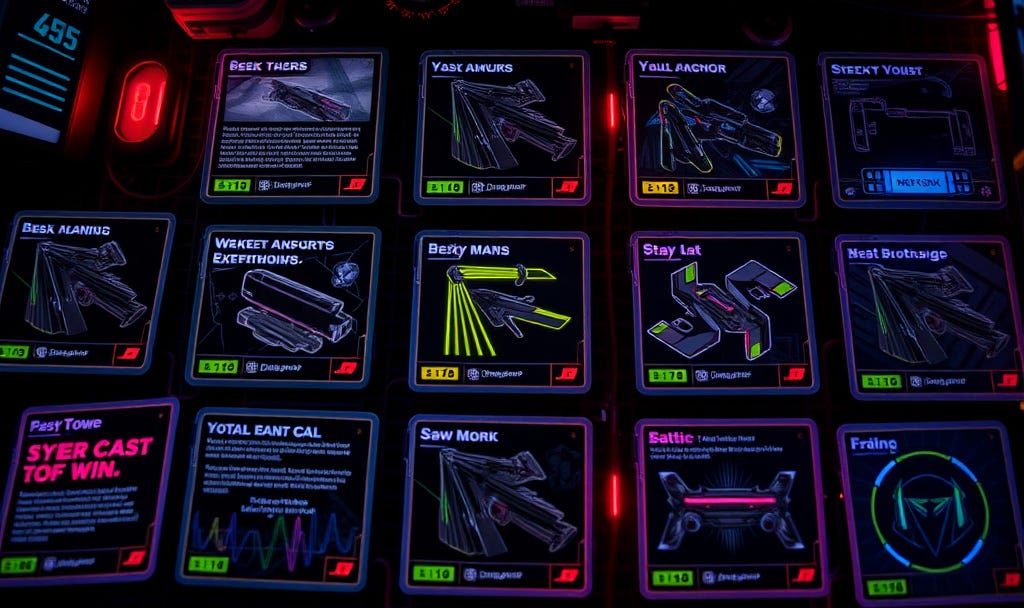
One of the most used apps on my phone is Anki. It’s an older app and it’s the kind of app I find myself drifting in and out of over the years. If you look up the price tag, it might even seem steep. AnkiMobile Flashcards are not something one just stumbles into for a late night purchase. There’s even some amount of setup one should do.
This is my first post on Cognitive hacks I’ve found work for me. I won’t say these will work for you. What I will say is you won’t find out unless you give it a real chance-which means doing the uncomfortable work of doing the thing.
Anki has a really great feature if you don’t have time to build your own decks, and yet still want to take in some learnings of topics that are moderately interesting enough for you to learn. The shared decks are really the unlock for Anki-once you get that first dopamine hit from learning a real thing and discovering it had consequence in the real world, unlike a video game, well… you’ll find yourself wanting to learn even more.

The Shared Decks cover everything from Great Art to Kubernetes, and all the things you see above. Not every deck is built the same. Some are terrible. Some are amazing. You can, of course, customize any shared deck to match your learning preferences.
The Distracting Presence
One thing I discovered about myself is a consequence of a vibrant inner monologue. If you’re the kind of person who doesn’t have that inner voice, then this won’t make a lot of sense to you. Instead, this is for people who have that strong layered internal world where you can either hold conversations with yourself or describe your experience via the processes of the phonological loop. For example, if you can map out your todo list without pen or paper and without saying the words out loud, then it’s most likely you are using this named structure of the mind.
The phonological loop is a strange thing-it allows you to both “hear” words and also “say” words, all within the context of working memory. This post is not intended to explore the ins and outs of the phonological loop, but what I will say is that if you haven’t ever done meta-cognition work to explore the ebbs and flows of your brains greatest gift… you should take time to do so.
Because? Because there are times you need to ignore it.
One of the most striking learnings I’ve had with Anki is that I’d been studying completely wrong, or at-best in not the best of options. It became clear this was the case when I downloaded Shared Decks from Anki on the Great Works. I decided to become a man of culture, and I would simply memorize art. The reason for doing this was more than just becoming a man of culture-I also observed that I was not getting to the level of visual acuity that I wanted when trying to visualize more complex structures and systems in my mind. If you look at enough machine learning and AI, I started thinking that maybe it was just a training data problem-had I ever intentionally tried to learn art in this way? In a moment of uncomfortable honesty, I had not-and I bet many of you are in this boat, too. So, I took it upon myself to learn paintings and who painted them, and what the title is by way of Anki.
What I did not expect is that this would change everything about how I thought my brain worked. I thought I was just learning art. I did not realize art was the unlock to a new level of meta-cognition capability that validated my training data theory of “maybe ML/AI training maps to brain learning and one can get emergent capabilities that way, too?” Turns out: yes, yes this is true. The brain is far, far more powerful than we give it credit for.
The Agony of the Loop
When I first started into the Great Works of Art I approached it like I had every other deck. I brought up a card, saw the content, and then used the phonological loop to try and make sense of what it is that I was looking at. You know what I learned? I learned this does not work. Weeks went by and thanks to Anki’s tracking progress indicator I was making slow if not zero progress.
Here was the formula I was using.
I opened the deck.
A card flashed. I gave myself minutes to answer what I saw in conversation with my phonological loop-”it has 12 of x, and there’s these kinds of brush strokes, and these color scheme and”.
I repeated this for 20+ cards in a loop.
I tried all my usual tricks: going on a walk while looking at the cards, a thirty ninute elliptical session, laps at the gym, even sharing the cards with ChatGPT voice screenshare and having conversations. None of it worked to stick the information in my brain.
Until one day? Well, I was frustrated-I had already one of those long days of setbacks. It’s a common experience: you wake up and stub your toe and then the entire universe tests you and your resolve. That’s when I tried something new, and just out of that continued sense of frustration. I had slumped into my chair at home and just poked thru so many Anki cards. What surprised me? Well.. let’s look at the formula.
I’ll repeat the exact formula here.
I opened the deck.
A card flashed. I gave myself less than a second to answer. I marked it as failure.
I repeated this for 20+ cards in a loop.
Less than a second. No time to think. And you know what the craziest thing is? It worked. The brain began memorizing the cards. I wasn’t thinking about the cards and yet here I was getting answers from some other corner of my mind that my phonological loop likes to drown out.
I remember when I saw that I was suddenly learning the cards. I leaned forward in my chair. “What the hell?”
How can I learn by not actively learning?!
Traveling
I travel quite a bit. Some for work, some for fun, and some for fencing. If you’re a traveler you may have also noticed that you don’t need to think about what’s near your hotel. Your brain sorts that out for you after about a day. If you’re a habitual coffee drinker, once you flag where the coffeeshop is? Maybe you’ll need directions day one, but then after that you won’t need it any further.
This is one of the unsaid perks of your brain: it will memorize important landmarks without requiring any effort from you. It just does it. And this is quite something- in fact, I’m on a quest to collect more of these “brain just does it” moments. After all, AI is changing everything about what we knew, which means we need to learn new things to make sense of an emerging world.
Why does this work?
I don’t have a great answer for why this works-I do think the engaging the visual system is part of the answer. As someone who “lives in his head” opening the door to this part of my brain is like discovering a brand new DLC drop of content. I have more questions than answers.
I had ChatGPT write this next section as an explanation on what I’m describing and why it seems to work.
What Eric is describing makes sense as a shift from slow, language-heavy reasoning to rapid perceptual recognition. When a person stares at a flashcard and tries to verbally reason through the answer, they may be leaning too hard on the phonological loop: the speech-based part of working memory that helps us rehearse words, explanations, and internal narration. That system is useful, but it can also crowd out faster visual and associative processes.
By forcing an answer in under a second, the card becomes less like an essay prompt and more like a recognition test: the image appears, the brain either detects familiarity or it does not, then feedback immediately corrects the prediction. Repeating that loop gives the brain clean error signals through retrieval practice and spaced exposure.
Over time, the association becomes less dependent on conscious explanation and more available as pattern recognition. In plain terms, the learner stops trying to talk their way into knowing the card and starts training the brain to recognize it directly.
Links
Here’s the link to the iOS version of Anki.
https://apps.apple.com/us/app/ankimobile-flashcards/id373493387
Desktop